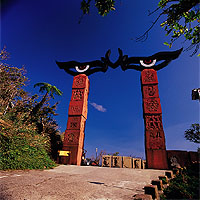
Gate of the Divine Eye
Tianyan (divine eye) refers to the vision of emptiness in which all things are clearly discerned. The realization of emptiness results in the arising of the bodhisattva's eye of compassion which watches over all sentient beings. The eyes of awakening—a style unique to Buddhist art—on top of the Gate of the Divine Eye are supported by two stone totem poles carved with ancient symbols from various religions.
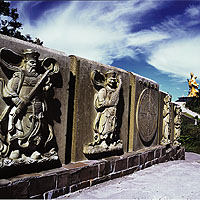
The Four Deva Kings and the Twelve Links of Dependent Origination
The Four Deva Kings are the tutelary deities of Buddhism. From left to right, they are: Virūḍhaka, guardian of the north; Dhṛtarāṣṭra guardian of the east; Vaiśravaṇa, guardian of the north; and Virūpākṣa guardian of the west.
This representation of the twelve links of dependent origination comes from Burma, and gives expression to the Buddha's insight into the nature of transmigration. With ignorance and craving as the axis, the only escape is spiritual practice leading to the realization of one’s original nature and the eradication of the recurring dream of rebirth.
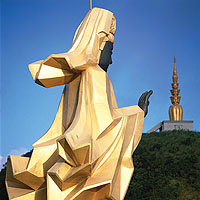
Guanyin Terrace
Like a loving mother, Guanyin (Avalokiteśvara) watches over and delivers sentient beings from suffering. Cast in bronze with a dark face and knitted brow, this north-facing statue stands 12 meters high and is known as "Duoluo Guanyin."Duoluo is the Chinese transliteration of the Sanskrit tārā, meaning "crossing over (from suffering)." On three sides of the base are verses and the 12 bodhisattvas from the Sūtra of Perfect Enlightenment.
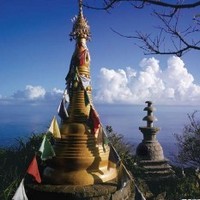
Stūpa Area
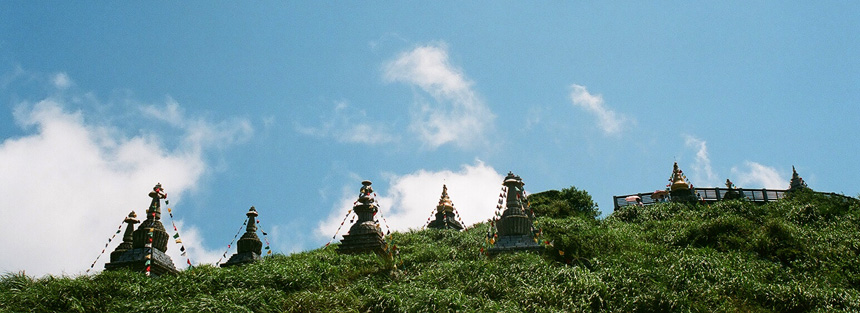
Stūpas were first used by Indian Buddhists to enshrine the relics of Śākyamuni Buddha. The stūpas at Ling Jiou Mountain contain such sacred objects as Buddha images, scriptures, and monastic robes, and are a source of inspiration to the Buddhist faithful. There are a total of 53 stūpas surrounding Guanyin Terrace.
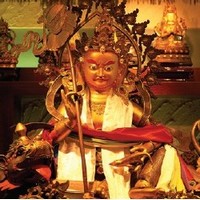
Milarepa Hall
Vaiśravaṇa—one of the Four Celestial Kings—is enshrined as the God of Wealth on the second floor of this building. Milarepa was a great master of the Karma Kagyu school of Tibetan Buddhism. Earlier, this was the site of a grassroofed structure which served as a year-round meditation hall. After a particularly strong typhoon destroyed the structure all that remained was the reclining jade Buddha from Burma. The Milarepa Hall was built on the same site and has become a favorite rest stop for visitors to the mountain.
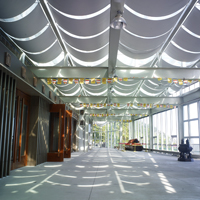
Main Hall (Lotus World)
Enshrined here are a jade Buddha from Burma, a Thousand-armed Thousandeyed Avalokiteśvara, and the Four Celestial Kings. Built of stone blocks, on the roof of this building is a copper stele engraved with the Kālacakra monogram, and the plaza in front is enclosed in tempered glass. During the extremely difficult early days on the mountain a corrugated metal building was built on this site for use as a meeting hall. With its expansive views over the ocean, Master Hsin Tao decided to build a large hall for group practice on the site, naming the Hall after a passage from the Huayan Sūtra.
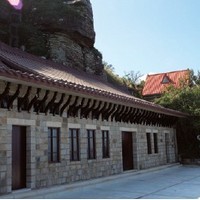
Founders Hall
One of the main buildings on Ling Jiou Mountain, this hall was completed in 1984 and was renovated in 2008. Facing the vast Pacific Ocean, it's a simple stone structure which harmonizes with the surrounding natural environment.
Enshrined in this hall are a precious jade Buddha statue from Burma and a golden reclining Buddha from Thailand. Flowing out of the stone wall behind the hall are two natural springs flowing with "the water of compassion" and "long-life water." On the sacred stone inside the hall can be seen the naturally formed Guanyin seed syllable hūṃ in the Tibetan script:  . Behind the hall is Unicorn Crag; to the left is Vulture Head Rock; to the right, off in the distance, is Guanyin Terrace; and in front can be seen Great Roc Hill. . Behind the hall is Unicorn Crag; to the left is Vulture Head Rock; to the right, off in the distance, is Guanyin Terrace; and in front can be seen Great Roc Hill.
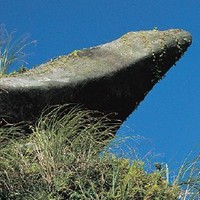
Vulture’s Head Rock
Because of its many unusual rock formations the locals named this place Yingzi (Eagle) Mountain. In front of the Founders Hall a huge boulder in the shape of a vulture’s head rises up out of the earth. Bearing a striking resemblance to the boulder on the top of Vulture's Peak in India, this is one of Ling Jiou Mountain's many natural totems.
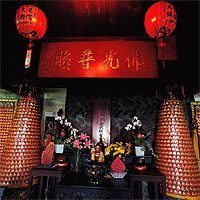
Patriarchs Hall
The oldest building on the mountain, this hall is regarded as the spiritual headquarters of the monastery, and contains an altar commemorating all of the patriarchs of the Chan school of Buddhism in India and China. Due to a lack of financial resources during the early phase of establishing the Monastery, all of the stones used to build this hall were quarried on site, resulting in a building which blends perfectly with its surroundings and gives clear expression to the natural simplicity of Chan.
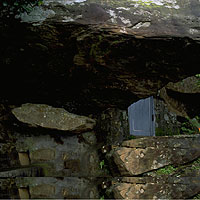
Fahua Cave
Having arrived at the Fahua Cave on Fulong Mountain in early 1983, Master Hsin Tao undertook a fast. Fasting is a way of bringing the most subtle part of the mind into sharp focus; it also helps to settle the mind and quicken the awakening of wisdom. Having attained deep insight into the meaning of the passage in the Lotus Sūtra which reads "Only when all beings are liberated, is enlightenment fully attained," Master Hsin Tao concluded his retreat in 1985 and began to devote himself to the establishment of Ling Jiou Mountain. Thus the cave is named after the Lotus Sūtra (Fahua jing in Chinese).
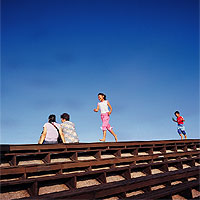
Ocean Viewing Terrace
Facing the Pacific Ocean, to the left can be seen the Shuangxi River entering the ocean, and to the right can be seen various monastic buildings hugging the cliffs. Practicing meditation here one easily understands what Master Hsin Tao meant when he said "Some waves are high, while others are low, but the water remains the same; in life there is sorrow and happiness, but the mind remains the same."
.jpg)
Eleven-Faced Guanyin
This Eleven-faced Guanyin is 15 meters in height and stands inside of a blossoming lotus. Also known as the Thousand-armed Thousand-eyed Avalokiteśvara, with 11 heads facing all directions, Guanyin watches over all sentient beings of the ten directions. The topmost head is that of Root Guru Amitābha, indicating Guanyin’s orientation towards the Western Pure Land. Within the statue are enshrined sacred objects representing the Triple Gem. The 108 relic stūpas surrounding the statue represent the subduing of the 108 defilements and the perfection of the 108 virtues.
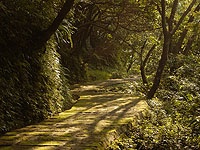
Arhat Path
Śākyamuni Buddha's 500 main disciples are referred to as the "Five Hundred Arhats." Scattered along the main two-kilometer-long path circling Ling Jiou Mountain are stone images of the 500 Arhats, commemorating the attainments of the Buddha's personal disciples.
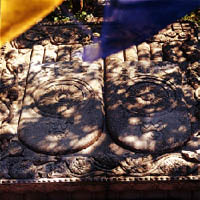
Samantabhadra Terrace
Samantabhadra holds a lotus and is seated on a white elephant with six tusks, symbolizing perseverance and practicality. Also found here are a "footprint of the Buddha" carved into a large boulder and a stone stele engraved with the Ten Great Vows of Samantabhadra.
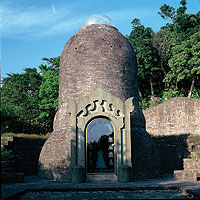
Kṣtigarbha Terrace
In the center of the Kṣtigarbha Terrace is the Great Vow Relic Stūpa, modeled after the Dhamekh Stūpa at the Deer Park in Sarnath, India, where the Buddha first began to teach. With his emphasis on filial piety, Kṣtigarbha is the savior of the latter days of the Dharma and helps those who have been reborn in hell. After going on retreat in the Kṣtigarbha Hall in 2006, Master Hsin Tao remarked that this is an excellent place for meditation and has the best energy of the whole mountain.
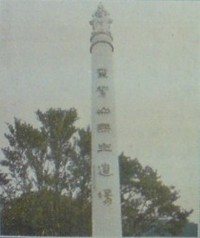
Aśokan Pillar
In 2008, on the eve of the monastic complex's 25th anniversary, Master Hsin Tao had this Aśokan pillar erected at the main entrance as a testament to the founding spirit of Ling Jiou Mountain. The wheel on top of the pillar represents the propagation of the Buddha's teaching, the lion represents the Buddha's intrepidity as a teacher, and the lotus petals represent the enlightened mind. The inscription on the shaft was written by the renowned architect Han Baode.
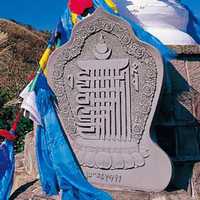
Kālacakra Stele
Kālacakra is part of the legend of Śambhala, and refers to the permanence of liberation amidst the changing winds of time. The Kālacakra monogram is inscribed on the 108 steles which mark the boundary of the monastic complex.
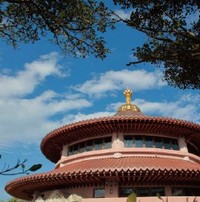
Golden Buddha Park
Golden Buddha Park is the site of the Religious and Cultural Education Section of Ling Jiou Mountain. Located along the Coastal Highway between the Fulong Train Station and the entrance to Ling Jiou Mountain, this site has long been a place of worship. In the main temple can be seen three ancient Buddha images from Thailand: the Buddha Pha Shinashi, the Buddha Phata Sarsda, and the Phra Phuttha Chinarat. These three golden Buddha statues have a long and notable history in Thailand, and their installation here represents the fruits of the contemporary interaction between the northern and southern Buddhist traditions. |
|